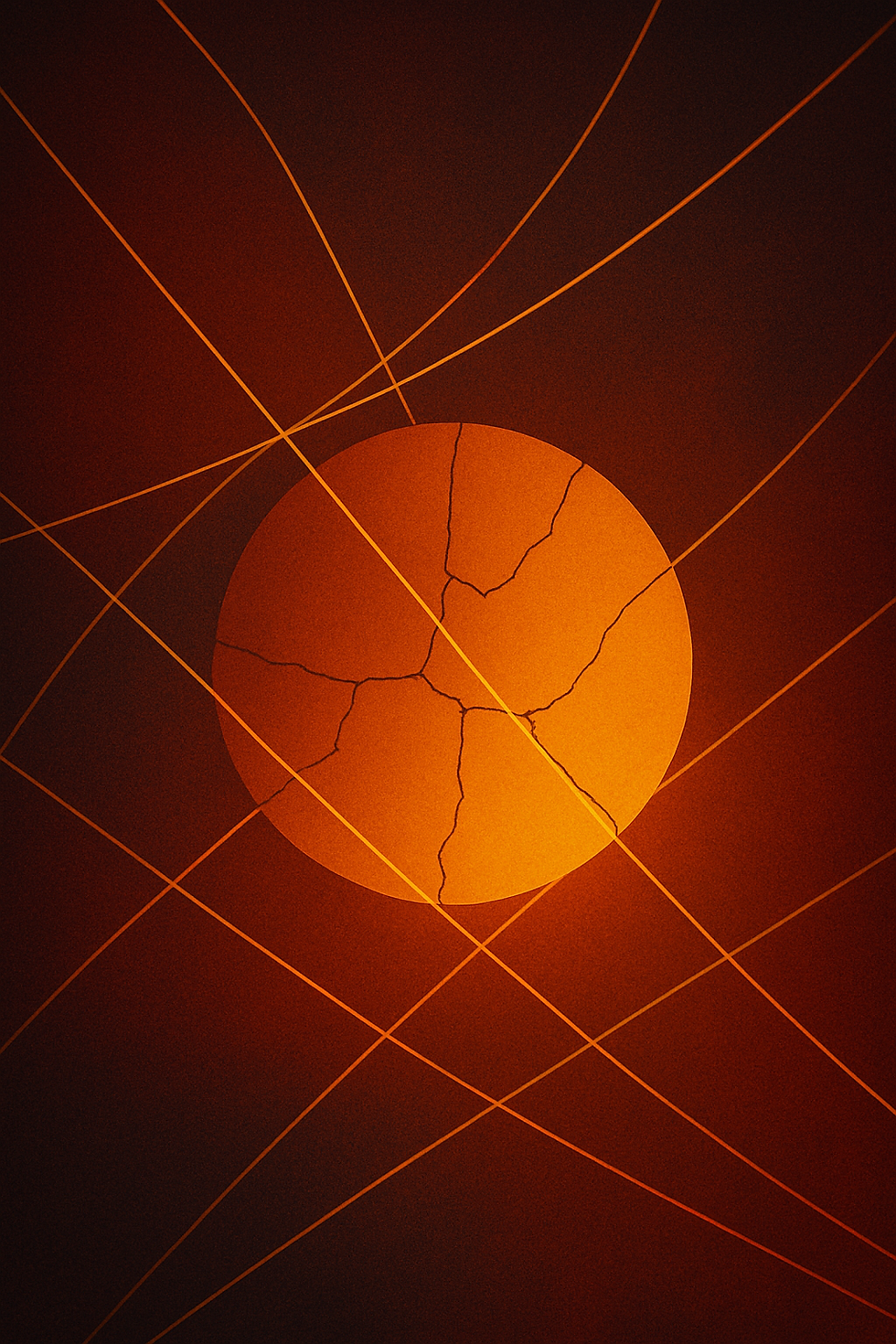
It’s a blooming crisis - in case of emergency, press flourish!
- Martina McGrath
- Jul 6, 2025
- 3 min read
Updated: Jul 20, 2025

Many of us arrive at the work of suicide prevention with a story, our why we’re here, some tied to devastating, life-altering heartbreak, grief and loss, some stowed neatly away in locked trunks, never again seeing the light of day. We don’t need to be told it’s serious — we’ve lived it, deep in our bones, we’ve felt it.
After a decade working in suicide prevention, I find myself asking different questions. Not instead of the ones we’ve always asked, like ‘how do we prevent suicide’? This will always be supremely important - but alongside that, there are newer questions I’m keen to explore.
For example, what keeps us well? What helps us not only survive and get by, but what helps us blooming flourish? This is a topic dating back to Aristotle who called human flourishing eudaimonia, a process beyond the pursuit of happiness, involving our internal and external social worlds.
As a lived experience practitioner in suicide prevention and mental health and more recently while completing a PhD on workplaces and suicidal distress, I’ve spent years listening to people speak (often for the first time) about their innermost and intimate experiences of suicidal distress and crisis — in workplaces and community settings – usually in discrete hushed tones, behind closed doors and while flocking towards morning tea at conferences and events. These conversations are mostly filled with potent and poignant regret, longing, nearly always profoundly sad but always steadfast in the solidarity of our shared collective humanity and knowingness. Too often these qualitatively rich stories are later analysed through a prism couched in risk, crisis, biomedical and prevention dominant world views.
Important, yes, maybe— but incomplete. These days, I’m also interested in exploring the protective factors that help nurture hope, healing, resilience and a chance for everyone to live their best lives, for them, their loved ones and communities - dancing to the beat of their own drums, connected, in rhythm and in harmony with the world around them!
Focussing on pursuing flourishing isn’t about bypassing, discounting, minimising or trivialising grief and loss or the myriad of multi-layered complexity involved in suicide. It’s about looking at the ingredients that help us - belonging, agency, meaning and social equity. As Marmot and more recent authors have stated, let's look at social determinants as a way of understand the barriers or facilitators to good health, wellbeing and equity (Marmot, 2017; Pirkis et al., 2024; World Health Organization, 2025b).
Flourishing, as a public health approach isn't just a passing fad. It is increasingly being recognised as a public health priority. For example, The World Health Organization’s recent Commission on Social Connection recently published report calls for urgent attention to address loneliness and disconnection, reinforcing the critical role of belonging and relational wellbeing as one key domain to achieving human flourishing (World Health Organization, 2025a).
Similarly, focussing on flourishing isn’t the opposite of or a discarding of building new knowledge and developing interventions that may help to address the intense emotional pain of suicidal distress and suicidal crisis. It’s about taking a more holistic, perhaps a more liminal view by understanding the things that keep us well — connection, agency, safety and purpose and meaning. As Nussbaum states, “The goal of public policy should be human flourishing: a life rich in capabilities, not just survival” (Robshaw & Nussbaum, 2023).
I'll continue to care deeply and collaborate on work seeking to address the immense human suffering and emotional pain of suicide and suicidal distress and crisis. But, I also want to spend more time exploring the things that keep us well as humans and as societies - hope, healing, resilience, social connection, belonging, agency, growth and flourishing.
As Adrienne Maree Brown said, "What we pay attention to grows".
References
Marmot, M. (2017). The health gap: The challenge of an unequal world: the argument. International Journal of Epidemiology 46(4), 1312-1318. https://doi.org/10.1093/ije/dyx163
Pirkis, J., Bantjes, J., Dandona, R., Knipe, D., Pitman, A., Robinson, J., Silverman, M., & Hawton, K. (2024). Addressing key risk factors for suicide at a societal level. Lancet Public Health, 9(10), e816-e824. https://doi.org/10.1016/S2468-2667(24)00158-0
Robshaw, B., & Nussbaum, M. (2023). Nussbaum and capabilities Human nature, human flourishing and the ten capabilities. In Martha Nussbaum and Politics. Thinking Politics. Edinburgh University Press. https://www.cambridge.org/core/books/martha-nussbaum-and-politics/nussbaum-and-capabilities-human-nature-human-flourishing-and-the-ten-capabilities/19A7835012167C51DCB67E13AEF74233
World Health Organization. (2025a). From loneliness to social connection: Charting a path to healthier societies: report of the WHO Commission on Social Connection. https://www.who.int/teams/social-determinants-of-health/equity-and-health/world-report-on-social-determinants-of-health-equity
World Health Organization. (2025b). World report on social determinants of health equity. https://www.who.int/teams/social-determinants-of-health/equity-and-health/world-report-on-social-determinants-of-health-equity